
A copper-binding peptide studied for skin health. Here's what the research suggests, where human evidence is still thin, and why topical and injectable versions aren't the same thing.
$149 / month(includes provider review, medication and shipping)
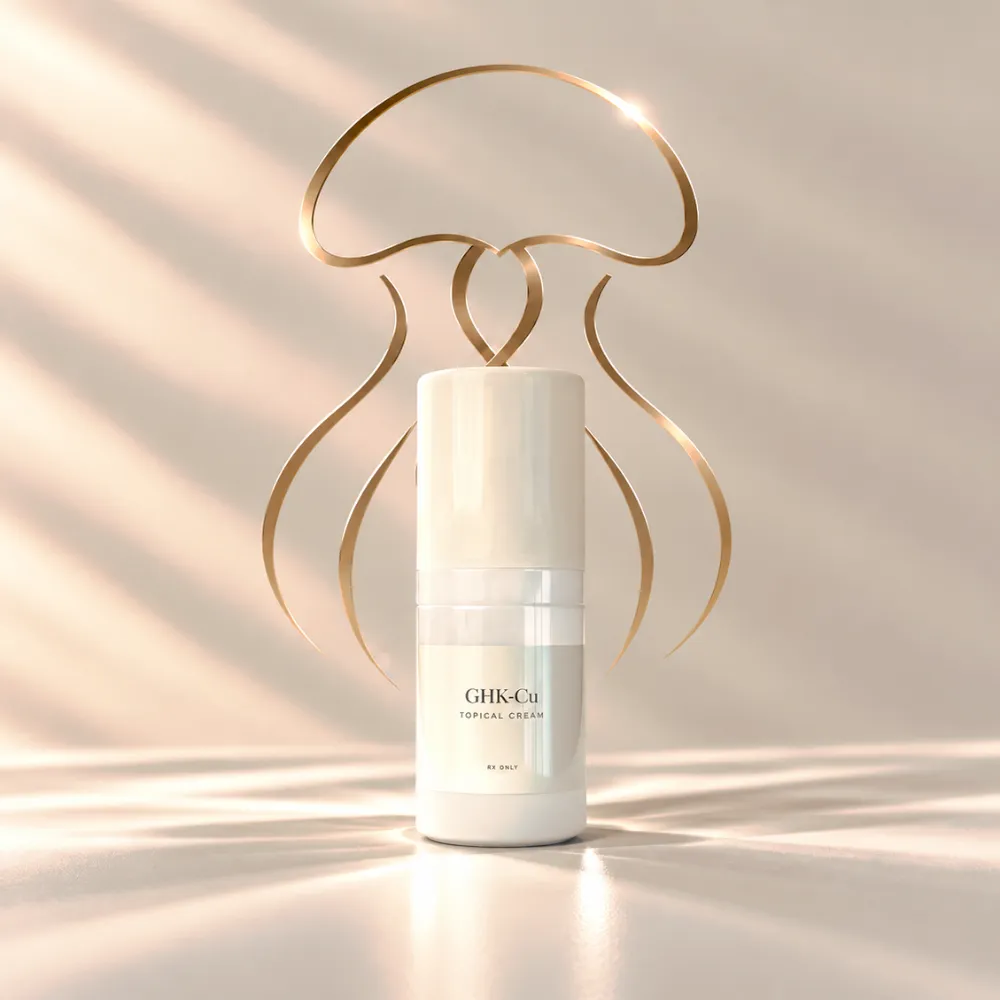
GHK-Cu is a copper-binding peptide made up of three amino acids: glycine, histidine, and lysine. It is also known as copper tripeptide-1 in cosmetic ingredient terminology.
GHK-Cu has attracted interest in skin care because laboratory and preclinical research suggests it may influence processes involved in collagen production, extracellular matrix remodeling, inflammation, and tissue repair. These functions have made it a subject of research in skin health and cosmetic aging.
However, promising laboratory findings do not automatically translate into proven results in people. Human studies of GHK-Cu remain limited, and the evidence varies by formulation, concentration, method of delivery, and intended use.
GHK-Cu is being studied for several potential applications in skin health. The strength of the evidence varies, and many of its proposed benefits are supported more strongly by laboratory and animal research than by large, well-designed human clinical trials.
GHK-Cu has a substantial body of laboratory and preclinical research behind it, but the human evidence is much smaller.
Topical GHK-Cu is incorporated into some cosmetic products designed for skin care. The intended benefits may include improving the appearance of fine lines, skin texture, and firmness.
The results of a topical product depend on more than the ingredient name alone. Concentration, formulation, stability, packaging, and skin penetration can all influence performance.
Topical GHK-Cu is available through independent licensed providers on the platform. While compounded GHK-Cu is not FDA-approved, it is prepared by licensed U.S. compounding pharmacies for individual patients.
Injectable GHK-Cu is different from topical copper peptide skin care and raises additional safety considerations.
The FDA has identified potential safety concerns involving compounded injectable GHK-Cu, including the risk of immunogenicity associated with peptide aggregation and peptide-related impurities. The agency has also noted that there are limited human data to inform safety considerations.
The safety considerations for injectable GHK-Cu should not be used to imply that topical products have identical risks. Conversely, evidence or experience with a topical cosmetic product should not be used to establish the safety of an injectable preparation. This page addresses topical GHK-Cu. It does not provide instructions for injection or establish that injectable GHK-Cu is safe or effective.
This list is not exhaustive. Follow the product's directions and discontinue use if significant irritation or an unexpected reaction develops. Seek medical advice for persistent or severe symptoms.
Topical products may cause irritation, redness, itching, or other skin reactions. The risk can depend on the formulation and a person's skin sensitivity. The safety profile of a specific product should be assessed using information relevant to that formulation. Stop using the product if significant irritation develops and seek medical advice if symptoms persist or worsen.
Cash-pay only, with no insurance claims. Payment does not guarantee a prescription. Your card is authorized at checkout and charged only if a licensed provider prescribes. If nothing is prescribed, the hold is released.
Billed per your chosen plan until you cancel. Every plan includes:
Cancel anytime by selecting “Cancel Subscription” in your patient portal, at least 48 hours before your next billing date. If a charge goes through after a successful cancellation, it will be refunded. See the Cancellation & Refund Policy.
GHK-Cu is a copper-binding tripeptide composed of glycine, histidine, and lysine. It has been studied for its potential effects on skin structure, collagen-related processes, inflammation, and tissue repair.
Some small cosmetic studies have reported improvements in measures of skin appearance. However, the evidence is limited, and results are not guaranteed. Larger, well-designed clinical trials are needed to determine the extent of any benefit.
Laboratory and preclinical studies suggest that GHK-Cu may influence pathways involved in collagen and extracellular matrix remodeling. However, this does not establish that every topical GHK-Cu product increases collagen in human skin or produces a clinically meaningful improvement.
GHK-Cu is marketed in some skin-care products for its potential to improve the appearance of firmness and elasticity. Early evidence is limited, and it is not possible to guarantee a firming effect or predict how much improvement an individual will experience.
No. GHK-Cu has attracted interest because of its potential effects on biological processes related to skin structure and repair. There is not enough human evidence to conclude that it reverses aging, extends lifespan, or prevents age-related disease.
There is no well-established timeline for results across GHK-Cu products. Outcomes may vary according to the formulation, frequency of use, individual skin characteristics, and the concern being addressed. Evidence from one formulation should not be treated as a guarantee for another.
No. Topical and injectable formulations have different routes of administration, exposure, and safety considerations. Evidence about a topical cosmetic product cannot establish the safety or effectiveness of an injectable preparation.
Topical products may cause irritation, redness, itching, or other skin reactions. The risk can depend on the formulation and a person's skin sensitivity. Stop using the product if significant irritation develops and seek medical advice if symptoms persist or worsen.
No. Compounded GHK-Cu is not FDA-approved. Topical GHK-Cu is available through independent licensed providers on the platform. It is prepared by licensed U.S. compounding pharmacies for individual patients.
More in the full FAQ.
A short online consultation, reviewed by a licensed provider. If it's not a fit, they'll tell you.
GHK-Cu cream is a compounded medication. Compounded medications are not FDA-approved and have not been reviewed by the FDA for safety, efficacy, or quality. This page addresses topical GHK-Cu only and is not a recommendation for injectable use. GHK-Cu requires a prescription from a licensed provider, who decides whether it is appropriate for you. Payment does not guarantee a prescription. Care is provided by independent licensed providers of the medical group assigned to you. Individual results vary, and the evidence for many proposed benefits remains limited. This page is educational and is not medical advice. Content last reviewed: October 30, 2026, by Jerome D. Chao, MD, FACS, and Rebecca A. Harrica, RPA-C.