
A molecule every cell uses to make energy and repair itself, and one your body makes less of as you age. Here's what the research shows so far, and where it's still thin.
From $199 / month(includes provider review, medication and shipping)
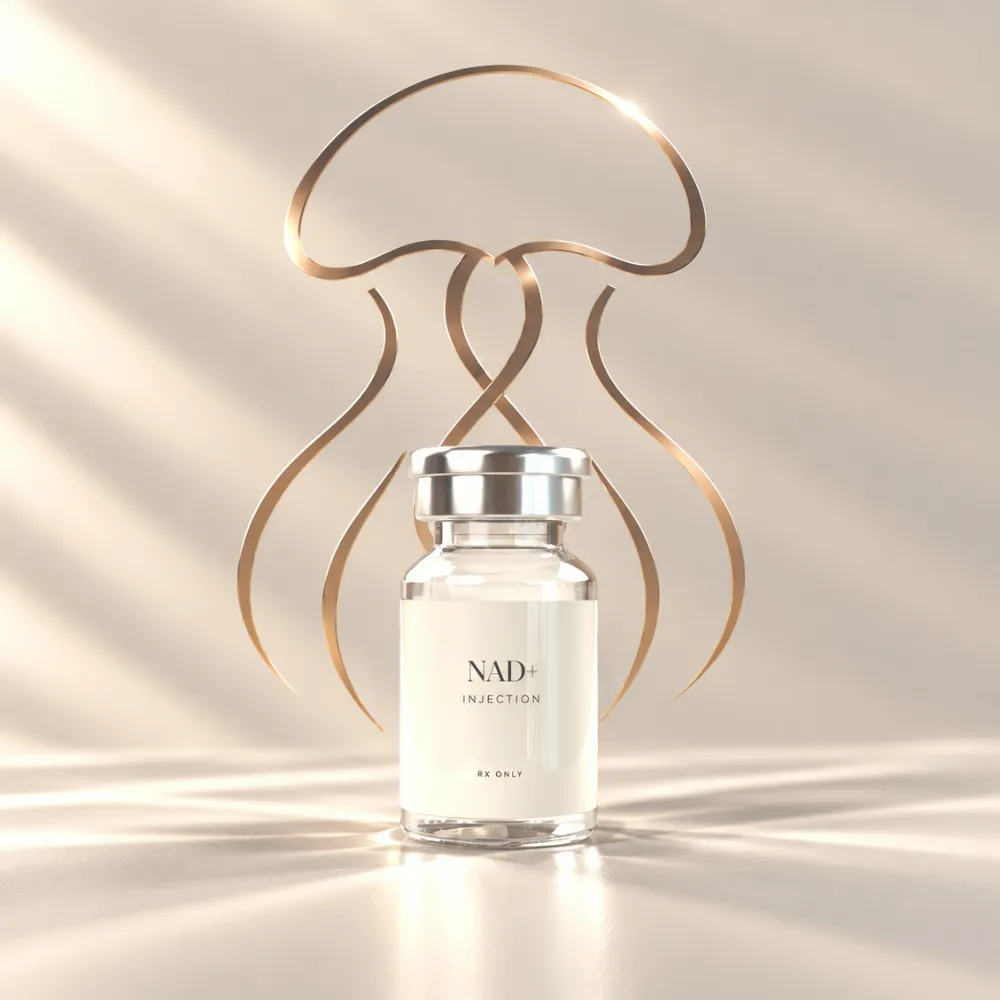
NAD+ (Nicotinamide Adenine Dinucleotide) is a coenzyme found in every living cell. It is involved in cellular energy production, DNA repair, and other processes that maintain normal cell function. NAD+ levels decline with age, and researchers are studying whether supporting NAD+ levels affects health and aging. That research is still developing, and benefits in people have not been established.
NAD+ therapy aims to top those levels back up. It isn't a peptide in the strict sense. It sits on our menu because it targets the same goal: supporting how your body works as you get older, with honest expectations attached.
NAD+ exists in two main forms:
The body continually converts between these forms as part of normal metabolism.
Researchers are interested in NAD+ because NAD+ metabolism can change with age, and NAD+ is involved in several processes related to cellular function and aging. Research suggests that NAD+ levels may decline in certain tissues as people age. The extent of this change varies by tissue, health status, and how NAD+ is measured. Scientists are investigating whether restoring NAD+ availability could improve aspects of metabolic health, cellular function, or resilience to age-related stress.
Much of the strongest evidence for broad improvements in physical function, metabolism, and aging-related outcomes comes from animal studies. Human research is growing, but the results are mixed.
At Jellyphysh, we believe good wellness decisions start with good information. We explain what research supports, what remains uncertain, and what to discuss with a qualified medical professional—without exaggerated promises or one-size-fits-all recommendations. A key message for NAD+ is that while NAD+ is essential to human biology, it does not automatically mean taking NAD+ supplements or receiving NAD+ injections improves health or slows aging.
Your provider decides which form fits you.
We separate what's well supported from what isn't. You deserve to know which is which before you decide.
Not sure whether something applies to you? Start the consultation anyway. A licensed provider reviews every answer and will tell you plainly if NAD+ isn't a fit.
Side effects people report with NAD+ are usually mild, such as nausea, headaches, or fatigue, but everyone reacts differently. Here's the full picture, sorted by what you should do about it.
Your provider needs your complete list: prescriptions, over-the-counter medicines, and supplements. They can't catch an interaction they don't know about.
General information, not a complete list. Your provider reviews your specific medications.
Everyone responds differently. This is the typical shape, not a promise.
Flushing and mild nausea are most likely now and usually ease.
Your provider may check in on how you're tolerating it.
A sensible point to decide with your provider whether it's worth continuing.
Long-term use should be reviewed regularly.
Your provider decides whether you need labs and when. NAD+ generally needs less lab monitoring than hormone-related therapies, but your provider may want a baseline depending on your health history. If labs are needed, they'll tell you before you commit.
Cash-pay only, with no insurance claims. Payment does not guarantee a prescription. Your card is authorized at checkout and charged only if a licensed provider prescribes. If nothing is prescribed, the hold is released.
Billed per your chosen plan until you cancel. Every plan includes:
Cancel anytime by selecting “Cancel Subscription” in your patient portal, at least 48 hours before your next billing date. If a charge goes through after a successful cancellation, it will be refunded. See the Cancellation & Refund Policy.
Over-the-counter supplements are usually precursors, like NR or NMN, that your body converts. Prescription NAD+ is the molecule itself, compounded by a licensed pharmacy and prescribed by a provider. Whether that matters more for you than a supplement is a fair question, and the evidence on it is still developing.
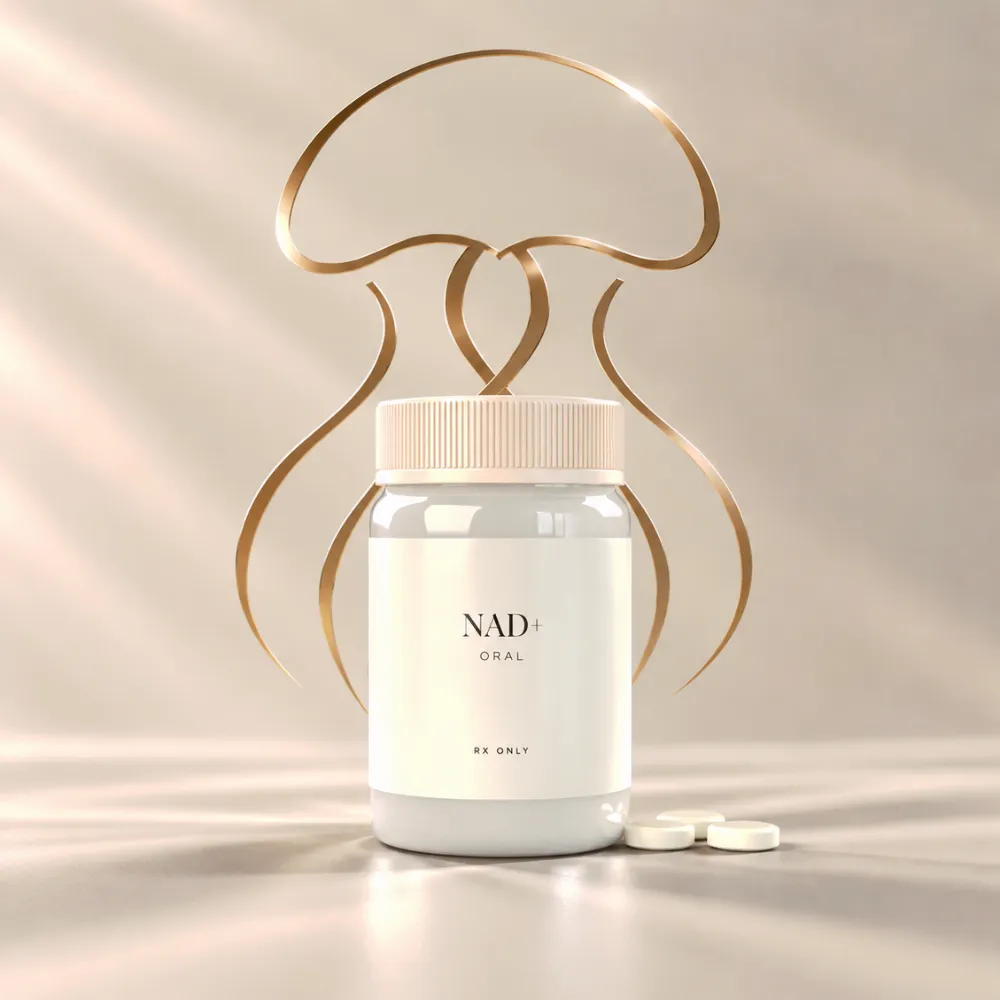
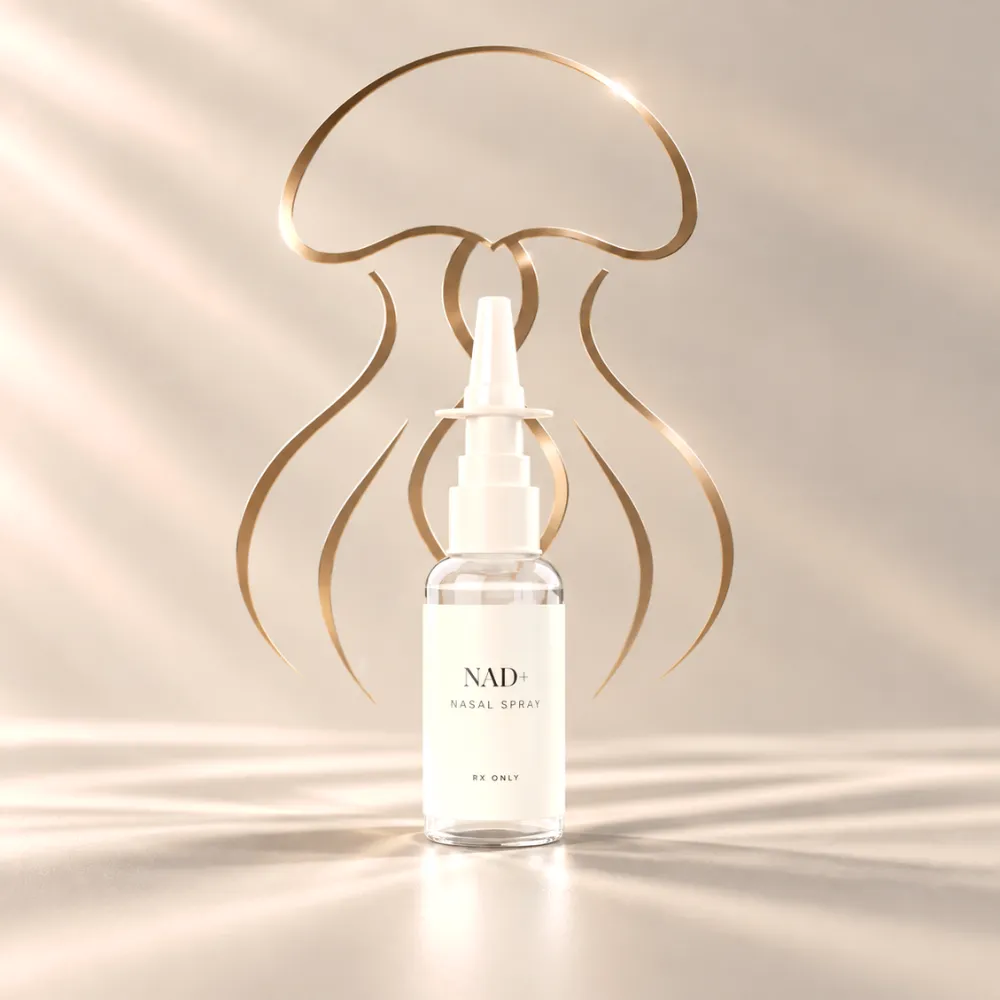
IV NAD+ is common at clinics, but it takes hours and needs a clinic visit. Our partner pharmacies prepare at-home forms instead: injection, oral tablet, and nasal spray. Your provider will explain the options.
No. It's compounded by a licensed U.S. pharmacy. Compounded medications are not FDA-approved and have not been reviewed by the FDA for safety, efficacy, or quality.
NAD+ is involved in the cellular processes that produce energy. However, evidence that NAD+ supplementation reliably improves how energetic people feel is limited and mixed.
That depends on the exact product, the other treatment, and the individual's health history. A qualified healthcare professional should assess potential interactions, safety concerns, and whether combining treatments is appropriate.
More in the full FAQ.
A short online consultation, reviewed by a licensed provider. If it's not a fit, they'll tell you.
NAD+ is a compounded medication. Compounded medications are not FDA-approved and have not been reviewed by the FDA for safety, efficacy, or quality. NAD+ requires a prescription from a licensed provider, who decides whether it is appropriate for you. Payment does not guarantee a prescription. Care is provided by independent licensed providers of the medical group assigned to you. Individual results vary. This page is educational and is not medical advice. Content last reviewed: October 30, 2026, by Jerome D. Chao, MD, FACS, and Rebecca A. Harrica, RPA-C.