
Because feeling like yourself matters. Hormonal changes during perimenopause and menopause can affect sleep, temperature regulation, vaginal and urinary health, and overall quality of life.
From $289 / 3 months(includes provider review, medication and shipping)
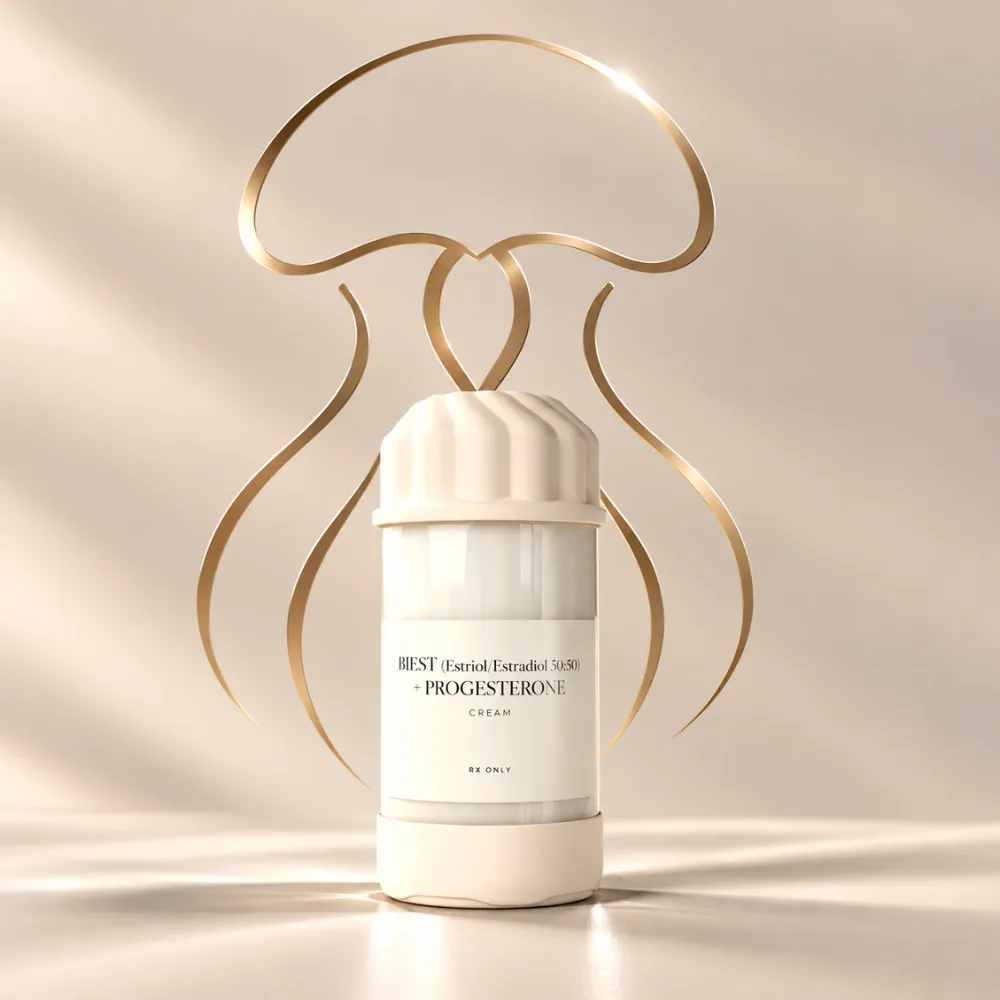
Hormonal changes during perimenopause and menopause can affect sleep, temperature regulation, vaginal and urinary health, and overall quality of life. But everyone's experience is different—and there is no single treatment that's right for everyone. It can involve different hormones, formulations, doses, and routes of administration, prescribed for different reasons. Evidence and safety considerations vary depending on the person’s age, symptoms, medical history, and the specific treatment.
Hormone replacement therapy, often called HRT, uses hormones to treat certain symptoms or medical conditions associated with changing or insufficient hormone levels.
For menopause or perimenopause, treatment may include:
The right treatment depends on symptoms, medical history, whether a person has a uterus, the formulation, and individual preferences.
Your provider decides which treatment fits you. Each is a 3-month supply.
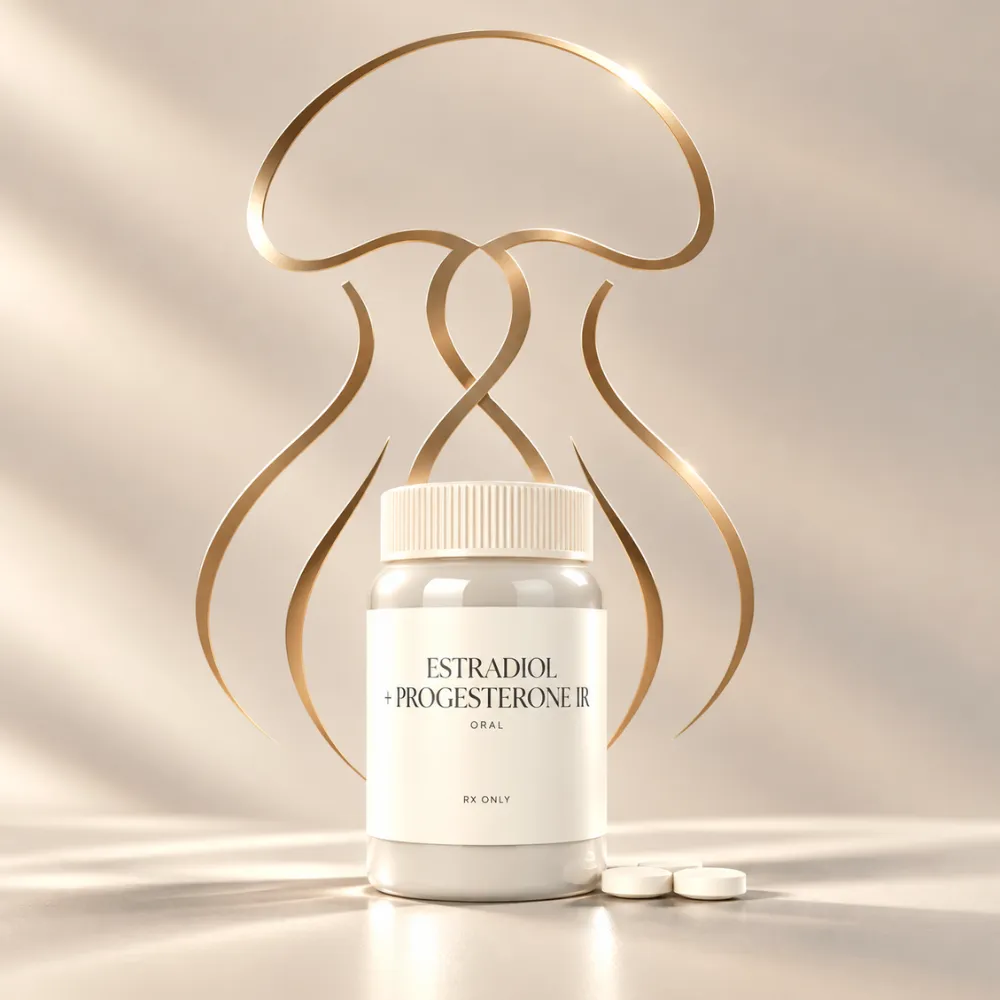

We separate what's well supported from what isn't. You deserve to know which is which before you decide.
People may have heard that HRT is either dangerous or universally beneficial. Here's what's actually changed, and what the terms mean.
There is no single screening list that applies identically to every hormone and every formulation. However, systemic menopausal hormone therapy may be unsuitable or require specialist assessment in people with certain conditions.
These are examples, not a complete list. The risks differ between systemic and local vaginal treatments, and individual circumstances matter. Not sure whether something applies to you? Start the consultation anyway. A licensed provider reviews every answer.
Most side effects are mild and ease in the first few months. Here's the full picture, sorted by what you should do about it.
Your provider needs your complete list: prescriptions, over-the-counter medicines, and supplements. They can't catch an interaction they don't know about.
General information, not a complete list. Your provider reviews your specific medications.
Everyone responds differently. This is the typical shape, not a promise.
Some people notice hot flashes easing within the first few weeks. Breast tenderness or spotting is most likely now.
Much of the benefit for hot flashes and night sweats usually shows by 8 to 12 weeks. Vaginal symptoms can take 2 to 3 months.
Your first 3-month supply ends here, a natural point to review dose and form with your provider.
Your treatment should be reviewed at least once a year, including whether you still need it.
Hormone levels don't need to be tested in every case. For typical menopause symptoms, treatment decisions are often based on symptoms, age, menstrual history, medical history, and clinical assessment. Your provider decides whether testing is needed. Keep up your regular mammograms and annual check-ups with your primary care provider.
Cash-pay only, with no insurance claims. Payment does not guarantee a prescription. Your card is authorized at checkout and charged only if a licensed provider prescribes. If nothing is prescribed, the hold is released.
Billed every 3 months until you cancel. Your price depends on what your provider prescribes.
Every price includes review by a licensed U.S. provider, your medication from a licensed U.S. pharmacy, shipping, and messaging with your care team.
Start your consultation →Cancel anytime by selecting “Cancel Subscription” in your patient portal, at least 48 hours before your next billing date. If a charge goes through after a successful cancellation, it will be refunded. See the Cancellation & Refund Policy.
It can be one option. Estrogen plays an important role in maintaining bone density, and bone loss can speed up during the menopause transition as estrogen levels decline. For some women, a provider may consider hormone therapy as part of protecting bone health, particularly around the time of menopause and in cases of early or premature menopause. The decision isn't the same for everyone. Your age, time since menopause, fracture risk, medical history, and other treatment options all matter.
Jellyphysh approach: We believe bone health deserves a place in the menopause conversation. Understanding your risk and discussing the available options with a qualified healthcare professional can help you make a more informed decision.
Estrogen plays a role in brain function, and researchers are studying how hormonal changes during menopause may relate to memory, concentration, and long-term cognitive health. Some people experience “brain fog” during perimenopause and menopause. Hormone therapy may help some menopause-related symptoms, particularly when sleep disruption and hot flashes are contributing to the problem.
Jellyphysh takeaway: Brain health matters, but HRT should not be started solely to prevent memory loss or dementia. Treatment decisions should be based on established benefits, individual symptoms, medical history, and a discussion with a qualified healthcare professional.
Whether HRT is appropriate depends on the treatment and the individual. A clinician should weigh expected benefits against relevant risks.
Weight and body composition can change during midlife for many reasons. HRT is not a weight-loss treatment, and it should not be prescribed with a promise that it will cause weight loss.
For people who have a uterus, systemic estrogen is generally paired with progesterone to protect the uterine lining. People who have had a hysterectomy may be candidates for estrogen alone, depending on their circumstances.
No. Different routes have different uses, absorption patterns, and safety considerations. For example, low-dose vaginal estrogen primarily treats local symptoms, whereas systemic treatments are used for symptoms such as hot flashes and night sweats.
Some people find their symptoms ease, particularly hot flashes, night sweats, and sleep disrupted by them. Results vary, and your provider can talk through what's realistic for you.
No. The hormone products offered through Jellyphysh are compounded by licensed U.S. pharmacies. Compounded medications are not FDA-approved and have not been reviewed by the FDA for safety, efficacy, or quality. FDA-approved bioidentical estradiol and progesterone products also exist, and your provider can talk through the difference.
More in the full FAQ.
A short online consultation, reviewed by a licensed provider. If it's not a fit, they'll tell you.
The hormone products offered through Jellyphysh are compounded medications. Compounded medications are not FDA-approved and have not been reviewed by the FDA for safety, efficacy, or quality. Hormone therapy requires a prescription from a licensed provider, who decides whether it is appropriate for you. Payment does not guarantee a prescription. Care is provided by independent licensed providers of the medical group assigned to you. Individual results vary. This page is educational and is not medical advice. Content last reviewed: October 30, 2026, by Jerome D. Chao, MD, FACS, and Rebecca A. Harrica, RPA-C.